Train Like a Grandmaster
Step away from the screen, pour a warm beverage, and discover the elegant way to improve your calculation.

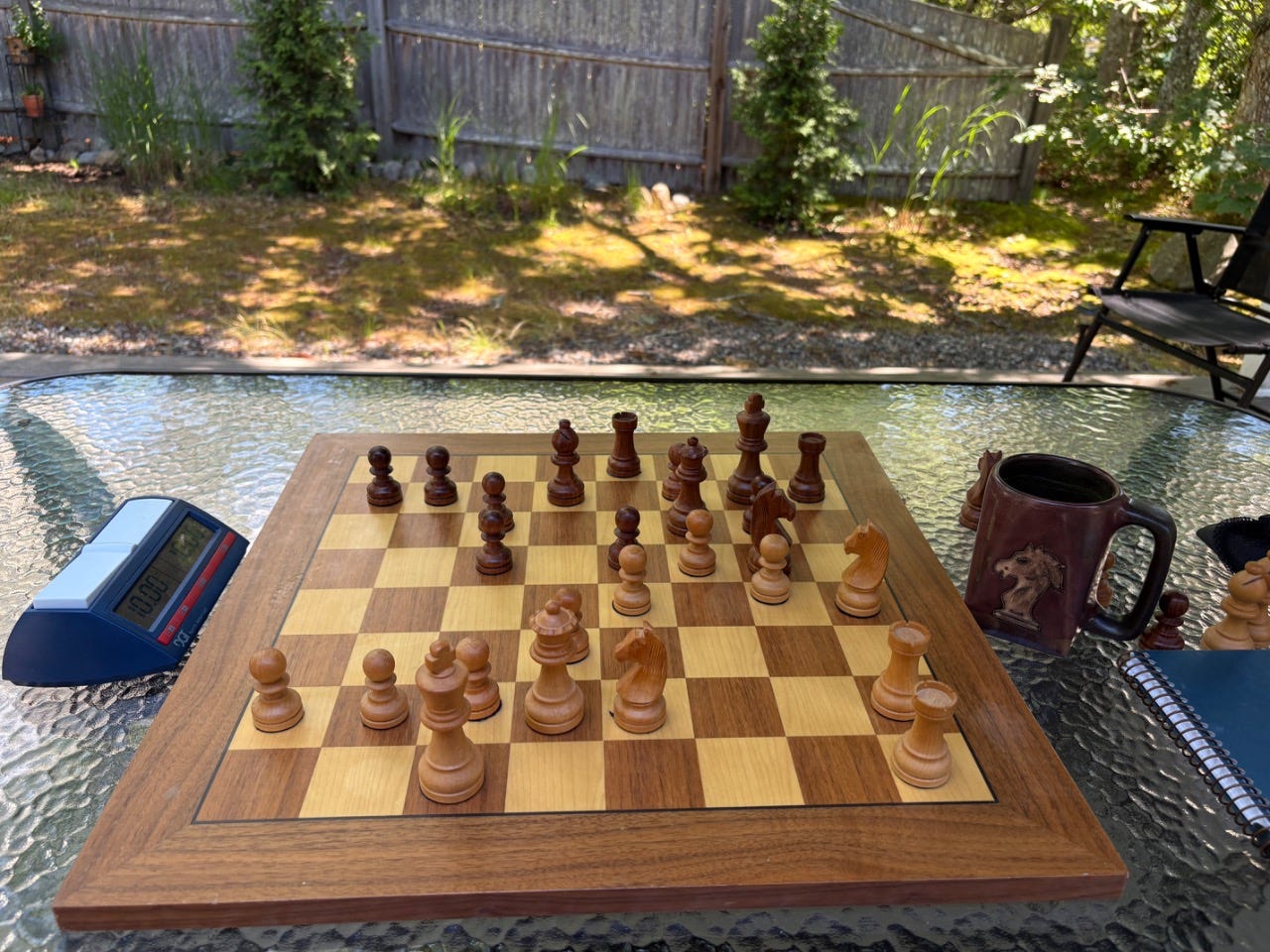
Welcome to my weekend chess laboratory.
I want you to imagine the scene: The weather is beautiful, there’s a gentle breeze, and I’ve just poured a fresh cup of tea into my favorite Knight mug.
It’s so easy to get caught up in the digital hustle of modern chess — swiping rapidly through puzzles on our phones, chasing dopamine hits on Chessable, and watching our screens filled with Stockfish evals. But true chess improvement requires us to slow down.
So today, I invite you to do the same. Sit back. Get your favorite hot beverage, enjoy the feel of the wooden chess pieces, and let’s explore an elegant, highly focused way to train your calculation.
The Grandmaster Workout
When I want to keep my calculation skills sharp, I step away from the computer and open one of the most brilliant, challenging puzzle books: Perfect Your Chess by GM Andrei Volokitin and his coach Vladimir Grabinsky.
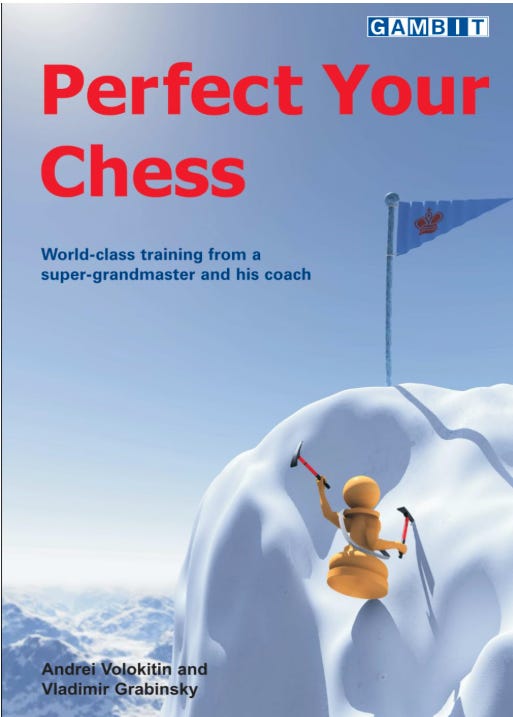
This isn’t a book of simple checkmates. It’s a collection of deep, complex, messy variations — exactly the kind of beautiful chaos you encounter in a real tournament game.
When I set up one of these positions on my wooden board, I follow three strict, mindful rules:
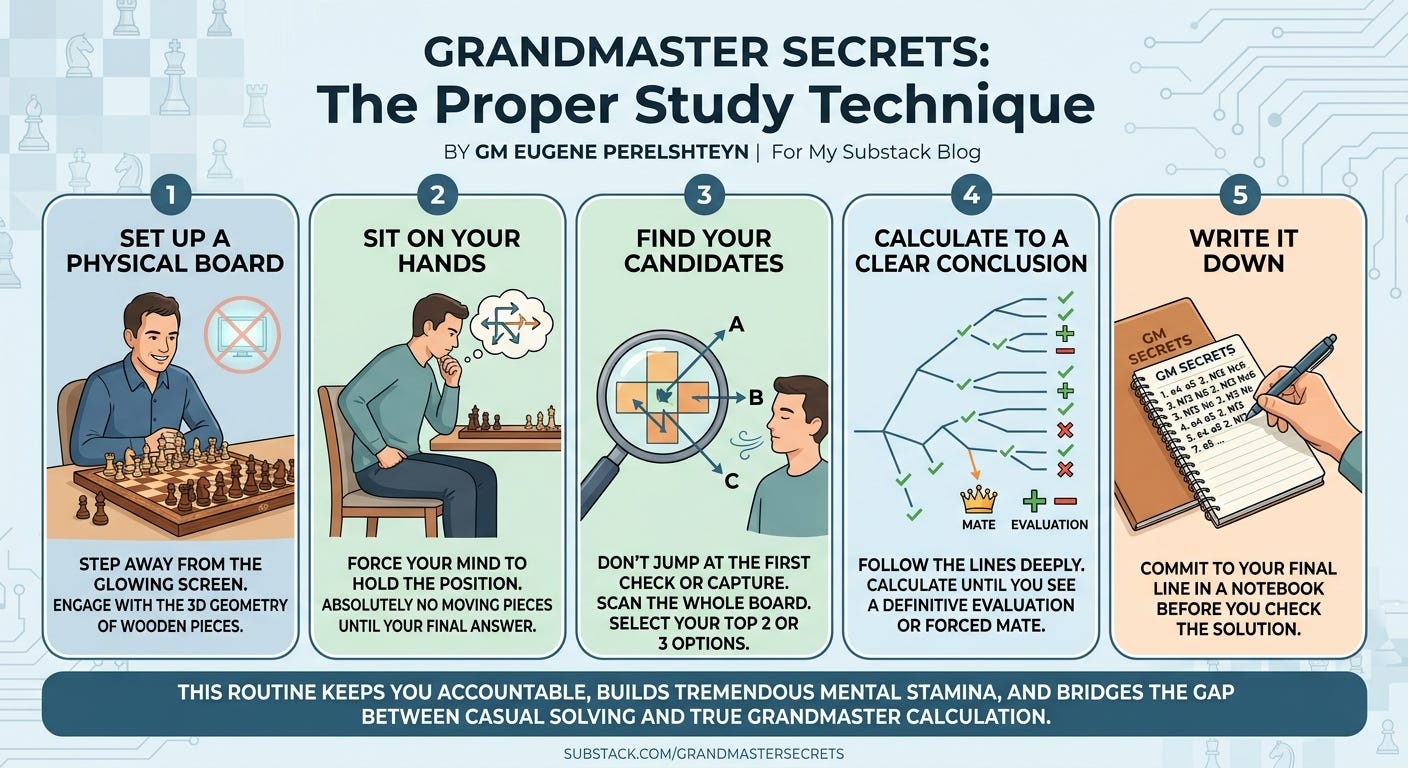
Sit on your hands. I do not touch the pieces to see what a variation looks like. Everything must be visualized in the mind’s eye.
Find the candidate moves. I don’t just calculate the first forcing check I see. I take a breath, look at the whole board, and gather my options.
Calculate to the very end. I don’t stop when a position “looks good.” I use my notebook to commit to a line, calculating until I see a clear evaluation or a checkmate.
Let me invite you into my thought process. Let’s look at the exact puzzle I set up on the board this morning.
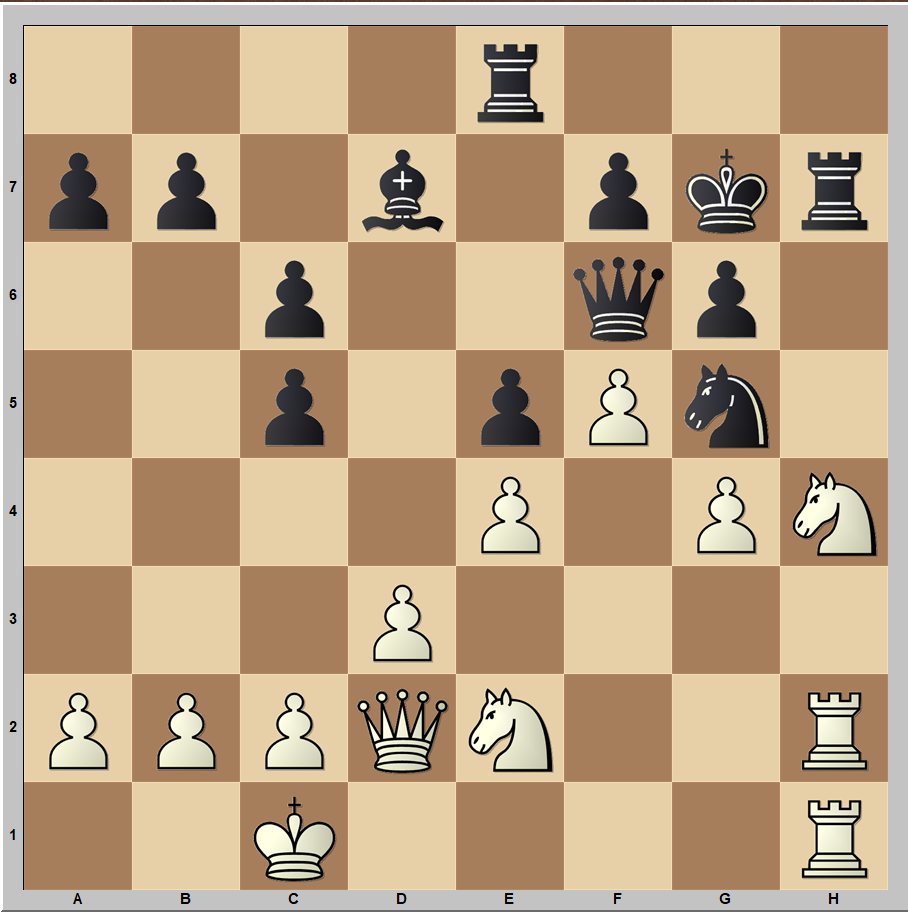
White to move:
Step 1: The Evaluation
Before calculating a single line, I take a moment to simply absorb the position.
White has a classic build-up in what looks like the Rossolimo Bxc6 setup. We have a nice pressure on the h-file, but Black’s knight on g5 seems to stop all of our threats.
Step 2: Finding Candidate Moves
Now, I scan the board for forcing moves and subtle ideas.
My immediate candidate moves are 1.Nxg6, 1.fxg6, or a tricky 1.Nf3. Let’s quickly take a look at them. Both 1.Nxg6? and 1.fxg6 accomplish nothing while 1.Nf3 at first looks like an interesting decoy tactic (1…Nxf3? 2.Rxh7+ wins) Black can actually insert an intermezzo 1…Rxh2! 2.Rxh2 Nxf3 3.Qh6+ Kg8 and I don’t see any mate as after 4.Qh7+ Kf8 the king escapes.
Step 3: The Deep Dive
This is where the deep focus begins. I try to prove my own ideas wrong or expand the candidates.
I’m struggling with the forcing moves as none of them work! So, now I’m trying to delve deep into the essence of the position and understand the key ideas. It looks like Black is about to play Reh8 and consolidate. The knight on g5 is such an eyesore…wait a minute! Who said that the solution has to be a tactic? So, maybe I can achieve a positional goal with 1.Ng1!? The idea is to trade off the knights with Ngf3 next and get a good N vs B structure. Double-checking some lines confirms White is just better. I write down my solution and the time usage.
The Solution:
Yes! The correct move is indeed 1.Ng1! The game continued: 28. Ng1 gxf5 29. gxf5 Kf8 30. Ng6+! fxg6 31. Rxh7 Nxh7 32. Rxh7 Re7 33.Qh6+ Rg7 34. Nf3 Be8 35. Ng5 and White won a few moves later.

Let’s look at another example.
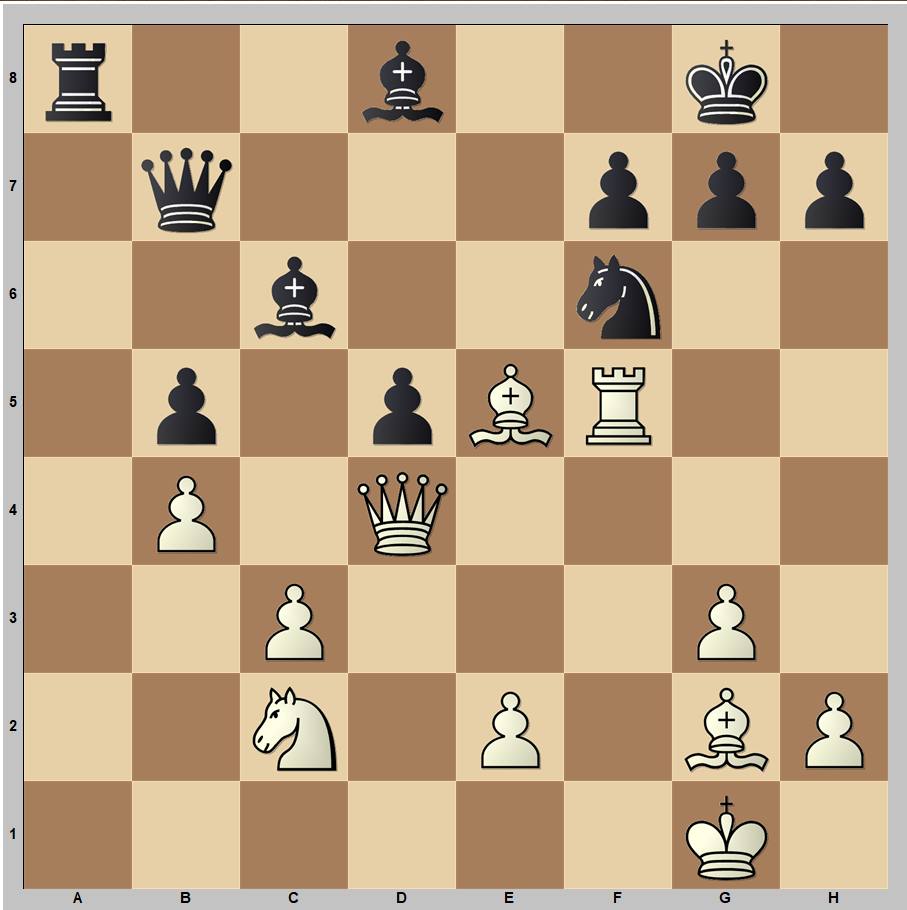
White to move:
Step 1: The Evaluation
White has a major issue with …Bb6 winning the queen, but it feels like moves like 1.Kh1 are too slow. We also have some back-rank issues, luckily our knight stops …Ra1+. Black’s bishop is terrible on c6, it looks like a big fat pawn. Yet, it’s unclear how to get our knight on d4 with a tempo.
Step 2: Finding Candidate Moves
I want to start with forcing moves, but both 1.Bxf6 and 1.Rxf6 lose a queen after 1…Bb6. Also, 1.Ne3 is a natural move, but why would I allow a check on a1? Maybe 1.Qf4 is a safe move, the game can follow 1…Bb6+ 2.Nd4 Ra1+ 3.Bf1 but I’m a bit worried about 3…Ne4!? Is White just worse there?
Step 3: The Deep Dive
I’m struggling in this one again, I just don’t see any forcing moves that work. Let’s take a step back and try to scan the board deeper…I do have an unusual idea to play 1.Bxf6!? Bb6 2.Bxg7! Bxd4+ 3.Bxd4. White only has N+B and a pawn for the queen. But look at Black’s king: it’s quite weak and Black’s c6-bishop is still a pawn. This feels like I have good compensation, but not sure if it’s enough. Ok, I will mark this as my solution.
The Solution:
Yes! The queen sac idea is correct 1.Bxf6! The engine also confirms that White is better with a +1 advantage. Wow, what a cool puzzle!
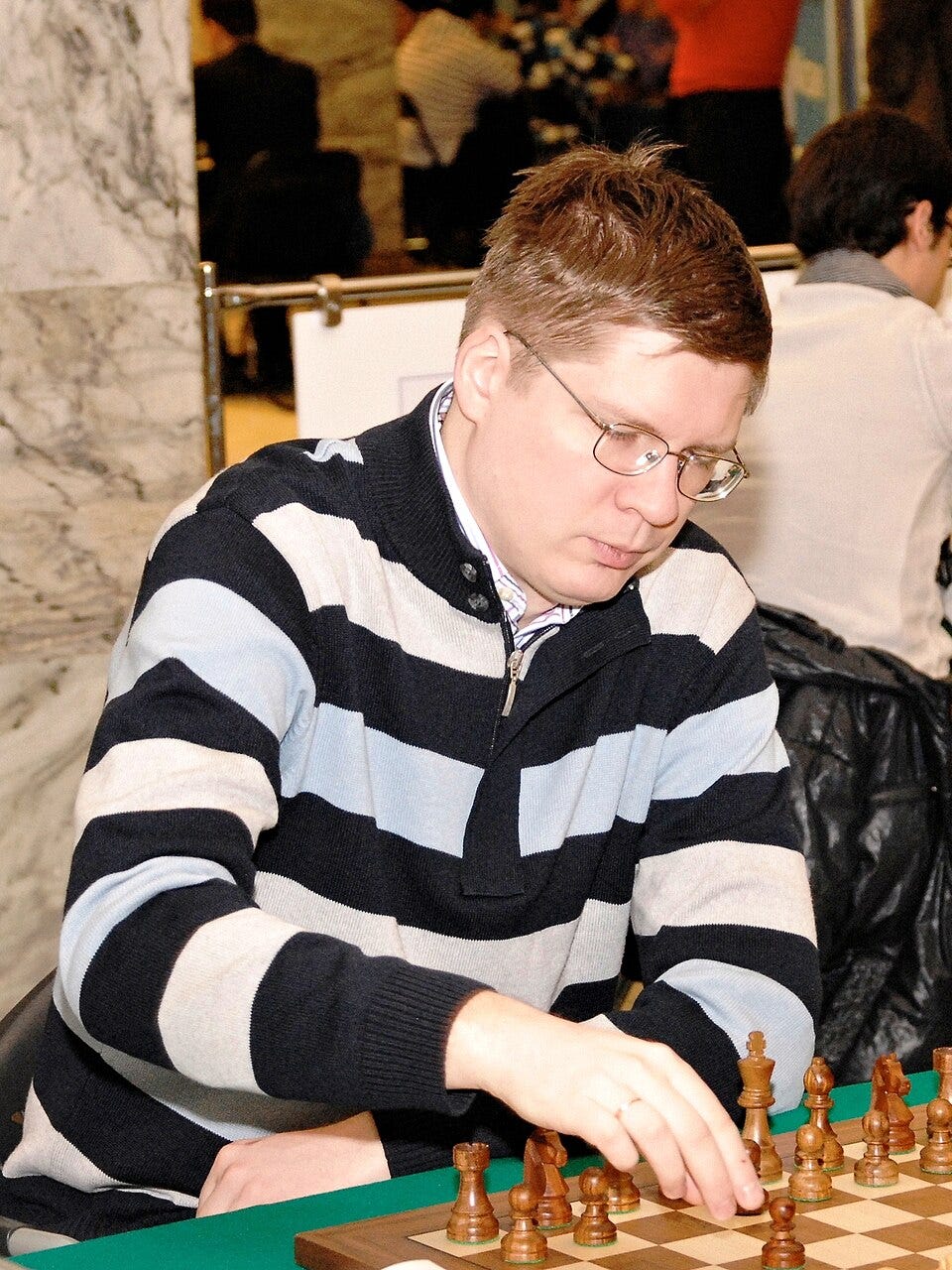
Quality over Quantity
This is how you build profound chess understanding. Spending 20 minutes in deep, uninterrupted focus over a single, beautiful puzzle is infinitely more rewarding than rushing through 30 easy tactics on a screen.
When you train this way, you develop a quiet confidence. You learn to trust your intuition and your calculation when you are sitting at the tournament board.
To make sure you get the absolute most out of your next study session, here is a quick visual summary of the proper technique:
Save Your Mental Energy
Of course, this kind of deep, Grandmaster-level calculation is mentally exhausting.
If you are forced to burn this precious mental energy on move 10 of the opening just to survive, you will have nothing left in the tank for the critical middlegame and endgame moments. You want to save your deep focus for when it truly matters.
How do you do that? By playing solid, intuitive openings where you understand the ideas, rather than trying to memorize razor-sharp, stressful engine lines.
If you want an opening repertoire that allows you to play with elegance and understanding, I created the Tournament Starter Kit exactly for you.
When you upgrade to a paid membership of Grandmaster Secrets, you instantly unlock:
The 1.e4 Traps PGN. Paid members get early access to the PGN file for the most common traps from my Upcoming 1.e4 Chessable course right now in the Openings Vault.
The 2026 Tournament Starter Kit: My complete “Old Man” repertoire (Catalan, Jobava London, Hyper-Accelerated Dragon, Nimzo-Indian) designed to be learned in just 40 minutes, featuring full video lessons and PGNs.
The Openings Vault: A permanent library of “Gambit Killers” to help you stop falling for common club-level traps as well as a new weapon: The Hungarian Dragon.