Intuition Is a Powerful Thing
Why over-calculating is often just fear disguised as deep thought.

I was recently rereading Garry Kasparov’s brilliant book, How Life Imitates Chess. While it’s written for a mainstream audience, the chess stories and reflections inside are worth their weight in gold for any competitive player.
While gathering material for his epic My Great Predecessors series, Garry made an interesting discovery.
You would think that after a game is finished, analyzing it in the quiet comfort of your study—with no opponent, no ticking clock, and no distractions—would naturally yield better moves than the ones played over the board.
Yet, looking back at the pre-engine era, Garry realized this often wasn’t true! The game-time intuition of the best players in the world was frequently superior to their deep analysis afterwards.
How is that possible? I wondered the same thing, and yet, intuitively (pun intended!), I completely agree with Garry on this one.
The critical factors that bring out the absolute best in us are extreme focus and the immense pressure of facing a live opponent. No opponent, no ultimate focus.
Many adult improvers study chess mostly on their own. You might watch YouTube videos, solve tactics online, or read a book on the couch. But let’s be honest: this is nothing compared to the raw intensity of a real-life tournament game.
In the tournament hall, there’s dead silence. Just you, the ticking clock, and the person sitting across from you trying to crush your position. Under those conditions, you reach an extreme level of focus that is nearly impossible to replicate at home. There are no phones, no house chores, no distractions. This is the crucible where a player’s instinct is sharpened. In these moments, intuition is king.
However, many adult improvers — and even Masters — struggle to actually trust that intuition. Instead of going with their gut on a critical decision, they second-guess themselves. They overthink, overcalculate, burn the clock, get into time pressure, and ultimately blunder. Then they wander away from the board wondering, “What just happened?”
To show you exactly what I mean, here’s an example from my own career where I failed to trust my intuition, and paid the price.
White to move:
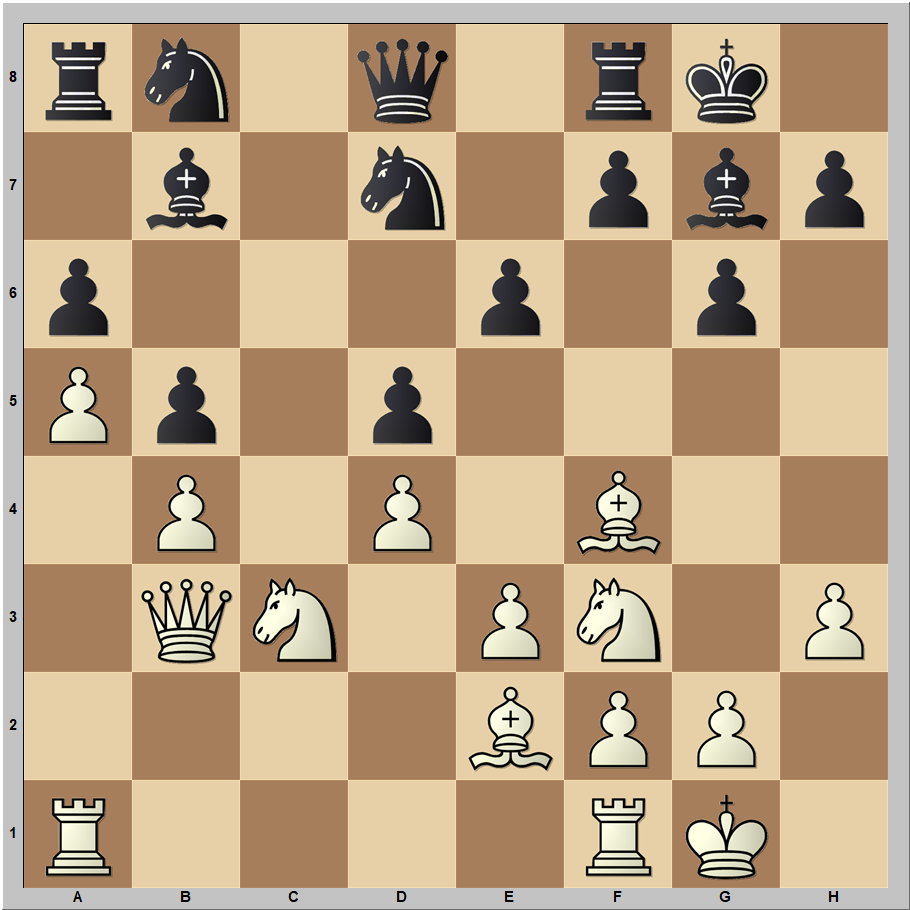
I’m White in a comfortable position vs a young 2100 player. The bishop on b7 is terrible and Black’s knights are stepping on each other’s hooves. My intuition told me that White should have a killer idea before Black gets to finish development. I briefly considered the correct 19.Rfc1 but didn’t quite trust myself to give up a piece for two pawns after 19…Nc6 20.Nxb5. Instead, I played a poor move 19.Bg5 and quickly lost all my edge, blundered later and almost lost the game…
However, had I trusted my intuition, after 19.Rfc1! Nc6 20.Nxb5! (no fear!) axb5 21.Bxb5 White gets a dominating position:
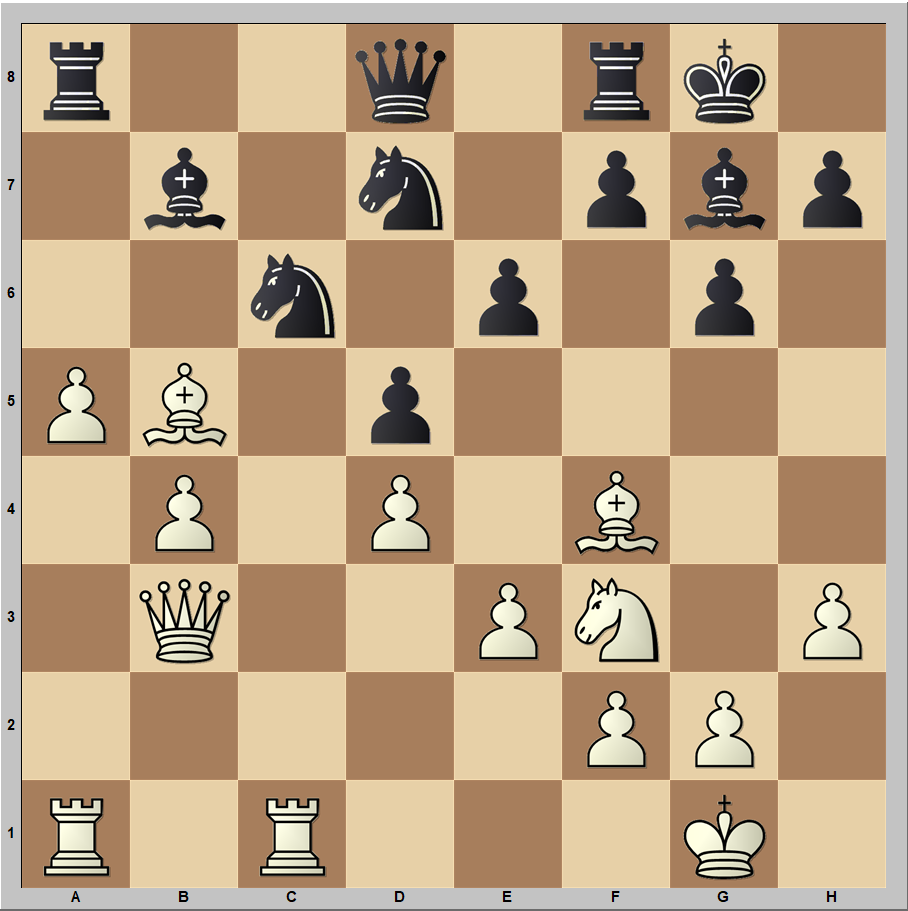
Black’s extra piece is meaningless against the a+b pawn duo, for example: 21…Rc8 22.Qa4! Ndb8 23.a6 Ba8 24.a7 and Black is lost.
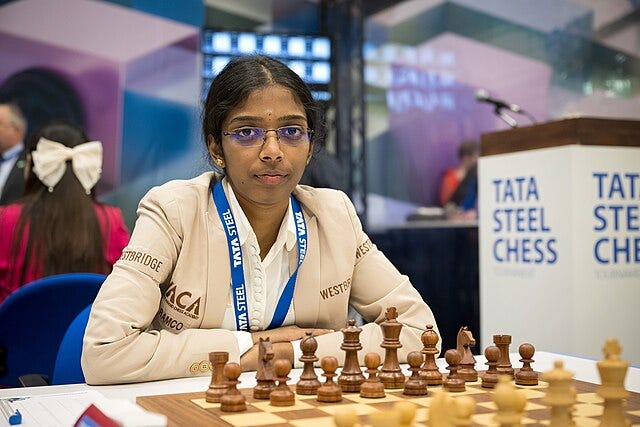
Here’s a game from the Reykjavik Open 2017 where I faced Pragg’s older sister, Vaishali, who is a strong chess player in her own right (shout-out to my student who’s playing there right now!).
Black to move:
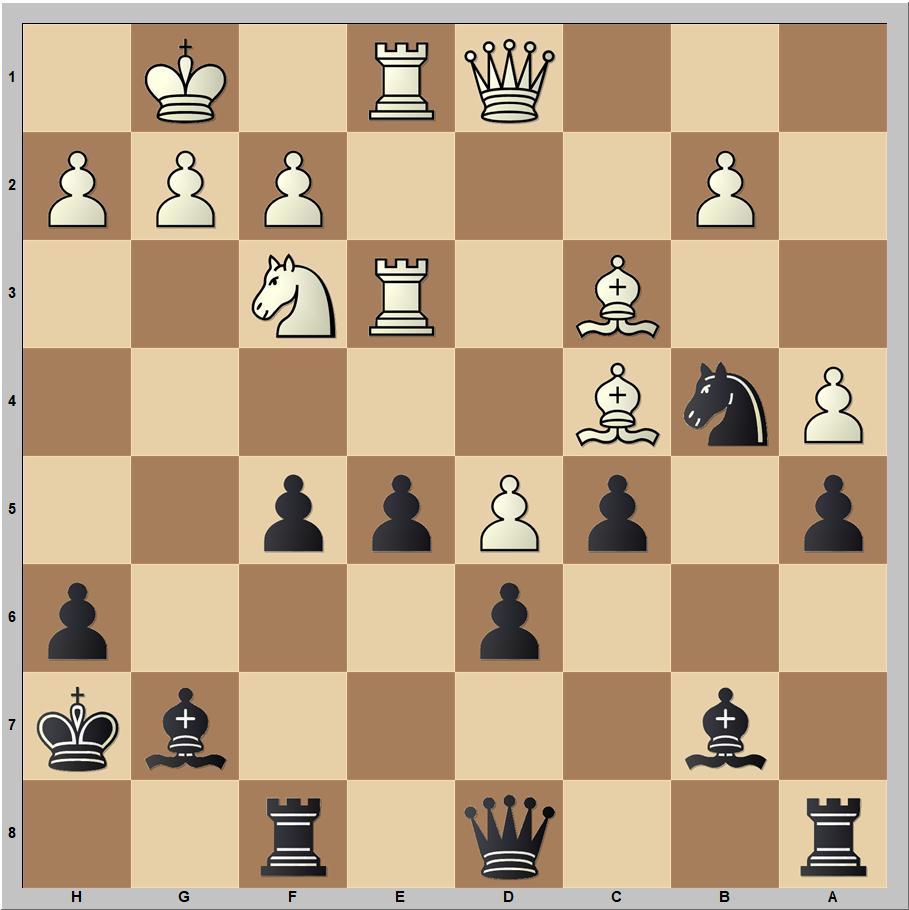
I took over the initiative and executed the standard …f5 break earlier. Black has nice f5 & e5 pawns with a strong knight on b4. I felt like I was better, but couldn’t quite find the correct plan. I wasted too much time trying to connect my rooks with 25…Qe7, which I correctly rejected due to a strong piece sac 26.Nxe5! And I played the game move 25…Qd7? instead. Unfortunately, I completely missed 26.Nh4! after which my kingside collapses as both Rh3 and Qh5 are coming. The game didn’t last long and she finished me off without any chances. Later, the analysis confirmed that my intuition was indeed correct and the best way to activate my rooks was 25…Ra7!! The idea is to drop the bishop to c8 so the rook could be activated on the 7th rank. The modern engine confirms and gives Black a slight edge!
Conclusion: Trusting Your Inner Radar
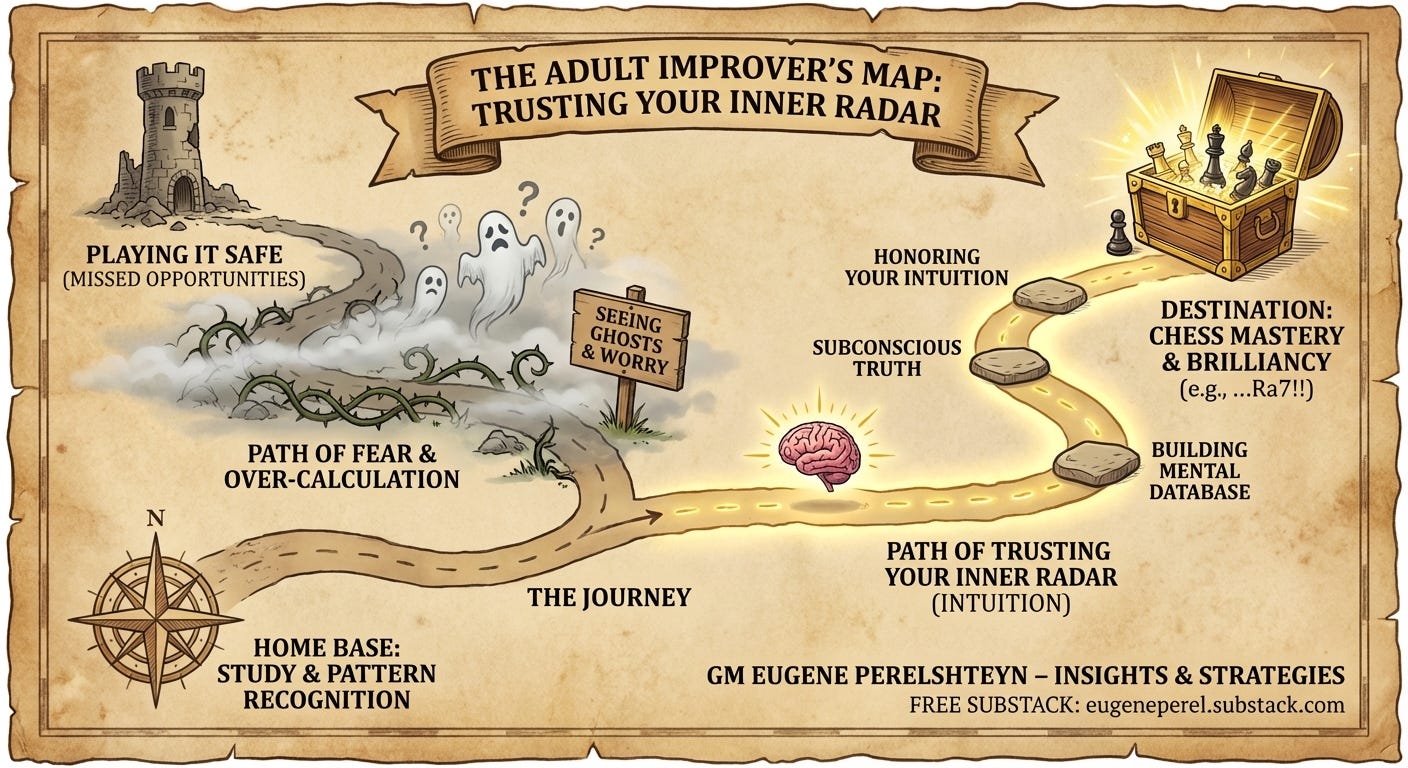
In both of these examples, my initial feeling about the position was absolutely correct. My inner radar was pinging, telling me exactly what the board demanded. Yet, instead of trusting my Grandmaster intuition, I let fear and over-calculation take the wheel. I played it “safe,” and I paid the price.
This brings us right back to Kasparov’s discovery. Through years of solving puzzles, reading books, and playing games, you are building a massive mental database of chess patterns. In the heat of a tournament game, under the intense focus we talked about earlier, your subconscious often spots the truth of a position before your conscious brain can calculate all the variations.
Over-calculating is often just fear disguised as deep thought. We see ghosts. We worry about our opponent’s replies instead of trusting the initiative we’ve built.
So, my advice to you as an adult improver is this: Start honoring your intuition.
If your gut tells you there is a killer blow in the position, or that a deep positional maneuver (like ...Ra7!!) is required, don’t immediately talk yourself out of it. Spend your valuable clock time figuring out how to make your intuitive idea work, rather than desperately searching for reasons why it won’t.
Stop Memorizing, Start Playing with Intuition
If you want to stop second-guessing yourself at the board, you need a repertoire that relies on understanding the position rather than memorizing 20 moves of engine theory.
I designed the “Old Man Chess” system to help adult improvers reach comfortable, strategic middlegames where your intuition—not your calculation speed—wins the game.
When you upgrade to a paid membership, you get instant access to:
The 2026 Tournament Starter Kit: My complete “Old Man” repertoire (Catalan, Jobava London, Hyper-Accelerated Dragon, Nimzo-Indian) designed to be learned in just 40 minutes, featuring full video lessons and PGNs.
The Openings Vault: A permanent library of “Gambit Killers” to help you stop falling for common club-level traps.
The Tournament Survival Guide: My 1-page PDF of gold nuggets from 35+ years of OTB play.
P.S. I’d love to hear from you in the comments: Have you ever lost a game because you "talked yourself out" of your first instinct?